Understanding Mindful Eating Practices
An educational resource exploring the principles of mindful eating and long-term lifestyle habits
Learn moreEducational content only. No medical services. No promises of outcomes.
Introduction to Mindful Eating Practices
Mindful eating is an educational concept that explores the relationship between awareness and daily food consumption. This practice involves paying attention to the sensory experiences of eating, including taste, texture, and satiety signals.
The concept stems from mindfulness principles applied to nutrition and daily habits. It encompasses understanding hunger cues, recognizing fullness, and developing a conscious relationship with food choices throughout daily routines.
Educational research suggests that mindful eating practices can be studied as part of broader lifestyle habit formation. This informational resource explains these concepts without providing individual recommendations or guarantees.
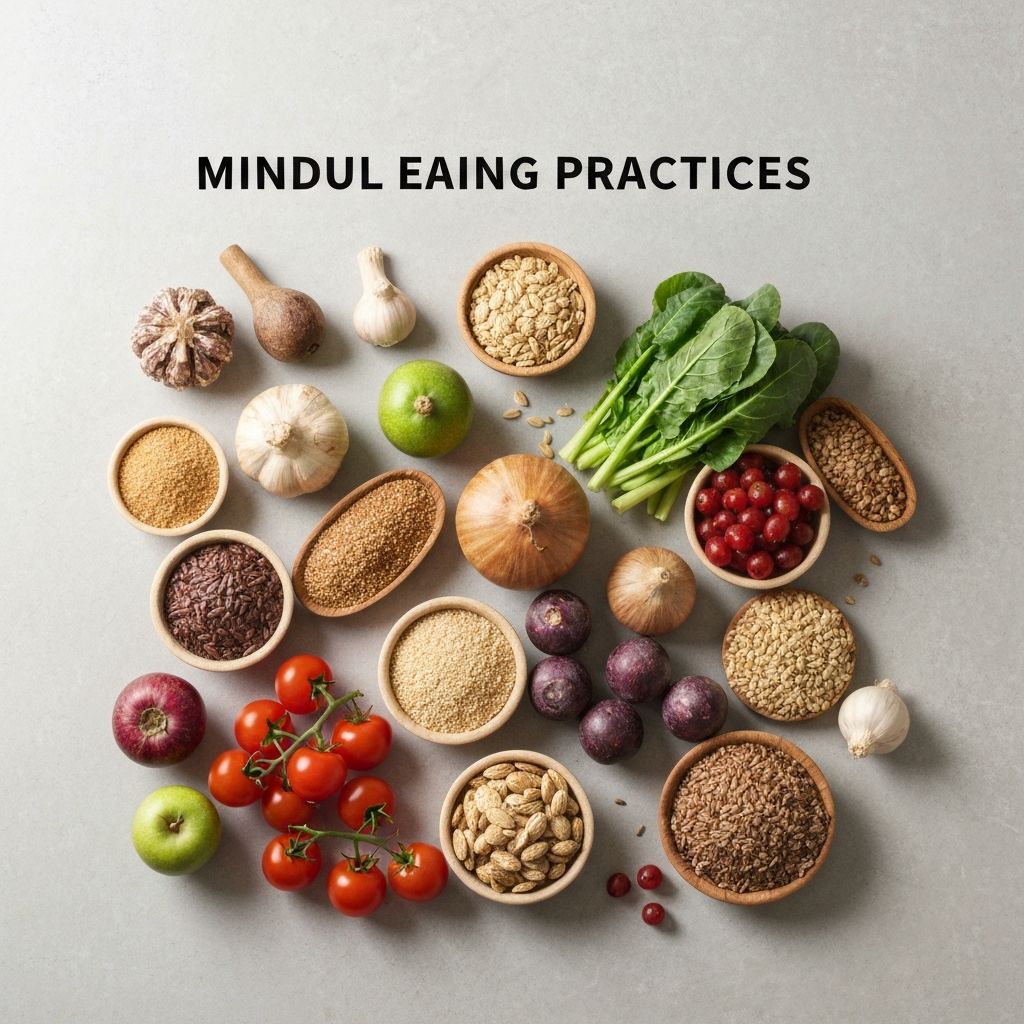

Principles of Long-Term Lifestyle Habits
Long-term lifestyle habits are patterns of behavior that develop over time through consistent practice. In the context of nutrition and daily eating routines, these habits involve regular patterns of food selection and consumption timing.
Educational frameworks identify several key principles in habit formation: consistency in daily routines, environmental factors that support behavior patterns, and gradual adaptation over extended periods.
The study of lifestyle habits reveals that sustainable patterns often emerge from small, incremental changes rather than dramatic alterations. This educational perspective emphasizes understanding processes rather than prescribing specific actions.
Examples of Daily Mindful Routines
Morning Awareness
Morning eating routines often set patterns for the rest of the day. Educational perspectives examine how individuals become aware of hunger signals upon waking and how environmental factors influence breakfast choices.
Observational studies note that taking time to eat without distraction in the morning correlates with increased awareness of food choices throughout the day.
Midday Practices
Midday eating often occurs in varied contexts, from workplace environments to home settings. Educational analysis explores how different environments influence eating pace and food selection.
Understanding these contextual factors provides insight into how daily routines shape eating patterns over time.
Evening Patterns
Evening eating routines frequently involve social contexts and relaxation periods. Educational research examines how these factors influence food choices and consumption patterns.
The transition from daytime to evening often marks shifts in eating behavior that can be observed and understood through mindful awareness.
Reflective Observation
Reflective observation involves noticing patterns in eating behavior without judgment. This educational concept encourages awareness of personal habits as a form of self-knowledge.
Such observation can provide information about individual patterns and preferences in daily nutrition choices.
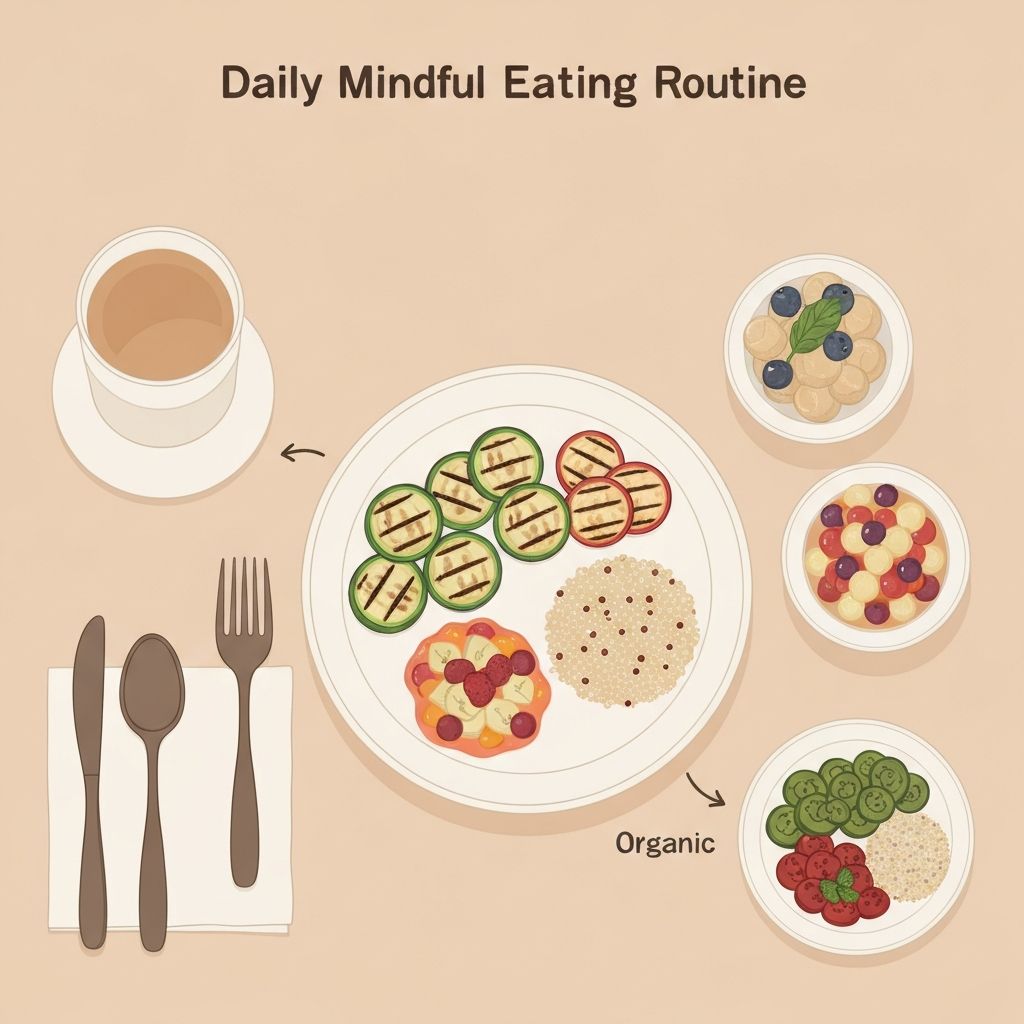
Combining Mindfulness with Nutrition
Mindfulness and nutrition intersect in educational contexts through the study of awareness during eating. This involves understanding how attention affects the experience of consuming food.
Educational perspectives explore sensory awareness during meals, including recognition of flavors, textures, and satisfaction levels. These concepts form part of broader discussions about conscious eating practices.
The combination of mindfulness principles with nutritional awareness creates a framework for understanding daily eating experiences. This educational approach examines how awareness might influence food-related decisions over time.
Research in this field discusses various factors including environmental influences, social contexts, and individual differences in how people experience and respond to food-related stimuli.

Educational Articles
Mindful Eating in Morning Hours
Exploring awareness practices during breakfast time and early day nutrition patterns.
Read in detailAfternoon Eating Awareness
Understanding midday nutrition patterns and workplace eating environments.
Read in detailEvening Mindful Practices
Examining evening eating routines and their role in daily lifestyle patterns.
Read in detailFrequently Asked Questions
What is mindful eating?
Mindful eating is an educational concept that involves paying conscious attention to the experience of eating. It includes awareness of hunger and fullness signals, food textures, flavors, and the overall eating experience. This is an informational explanation, not a recommendation for any specific practice.
How do lifestyle habits form?
Educational research suggests that lifestyle habits develop through repeated behaviors over time. Consistency, environmental cues, and gradual adaptation are factors studied in habit formation literature. Individual experiences vary widely.
What does this website provide?
This website provides educational information about mindful eating concepts and lifestyle habits. It does not offer medical advice, nutritional counseling, or personalized recommendations. All content is for informational purposes only.
Is this a nutrition service?
No, this is purely an educational resource. We do not provide nutrition services, meal plans, dietary advice, or any form of consultation. For personalized nutrition guidance, consult qualified professionals.
Can I expect specific outcomes?
No. This website makes no promises or guarantees about outcomes. We provide educational information only. Individual results, experiences, and responses to any practices vary greatly and depend on numerous personal factors.
Limitations and Context
All materials on this website are provided for educational and informational purposes only. The content explains concepts and describes phenomena related to mindful eating and lifestyle habits.
This resource does not provide individual recommendations, medical advice, or therapeutic guidance. Approaches to daily nutrition and eating practices vary widely among individuals and cultures.
The information presented here is not a substitute for professional consultation with qualified nutritionists, dietitians, or healthcare providers. Always seek personalized advice for your specific circumstances.
We make no guarantees or promises about outcomes. Individual experiences differ based on numerous personal, environmental, and contextual factors.